
Second Hand News: What to Look for Now in Trend-Aligned Circular Fashion
A strategic guide to emerging accessories, secondhand pricing signals and curation opportunities.

What should secondhand shoppers and circular-fashion curators look for in the current fashion landscape?
Fashion constantly revisits the past, but repetition is never exact. What keeps the cycle moving is the ability to reinterpret existing objects through new styling, materials and cultural contexts.
For secondhand consumers and curators, this creates an opportunity: many relevant fashion signals may already exist inside vintage stores, flea markets and forgotten stock.
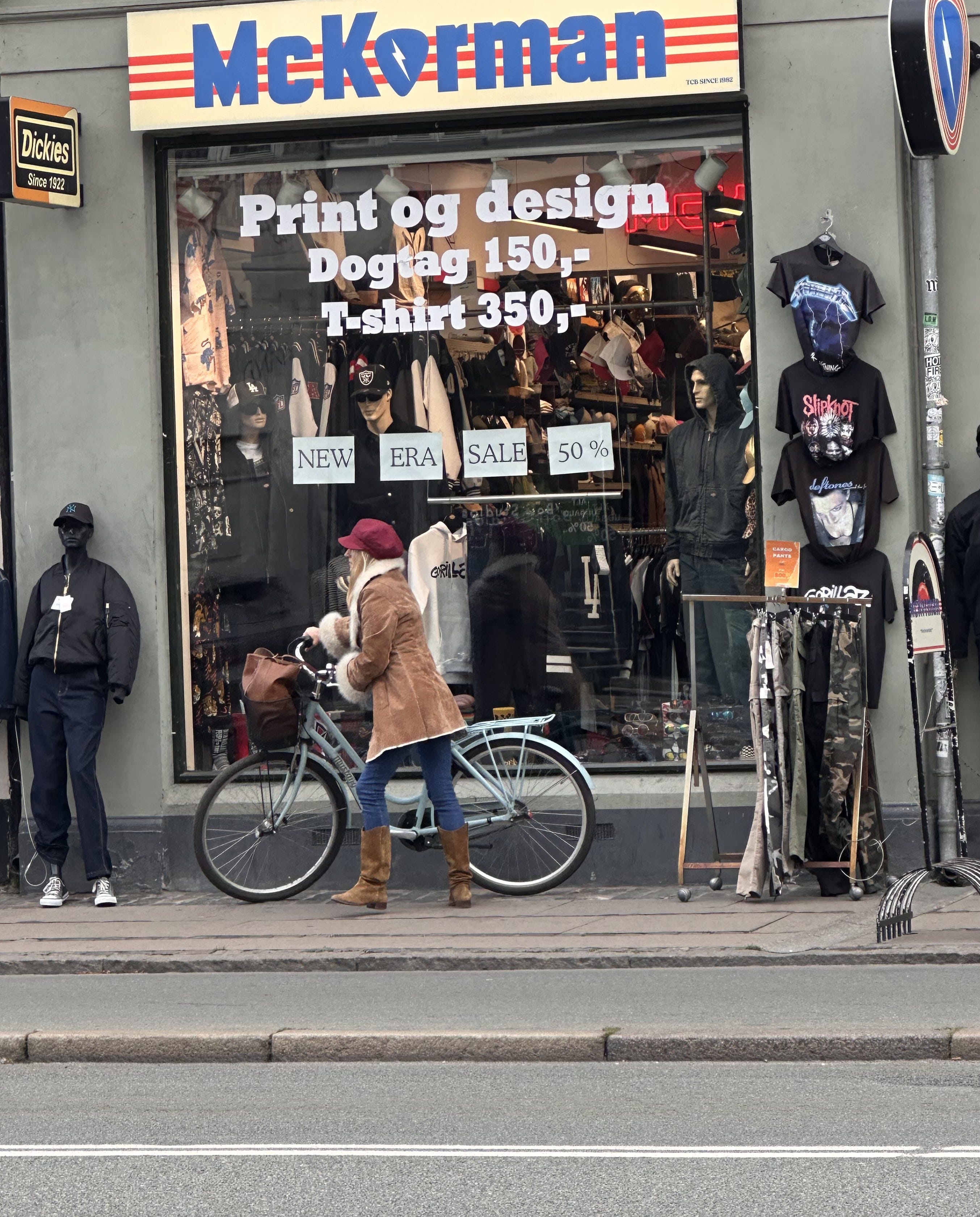
What to look for now
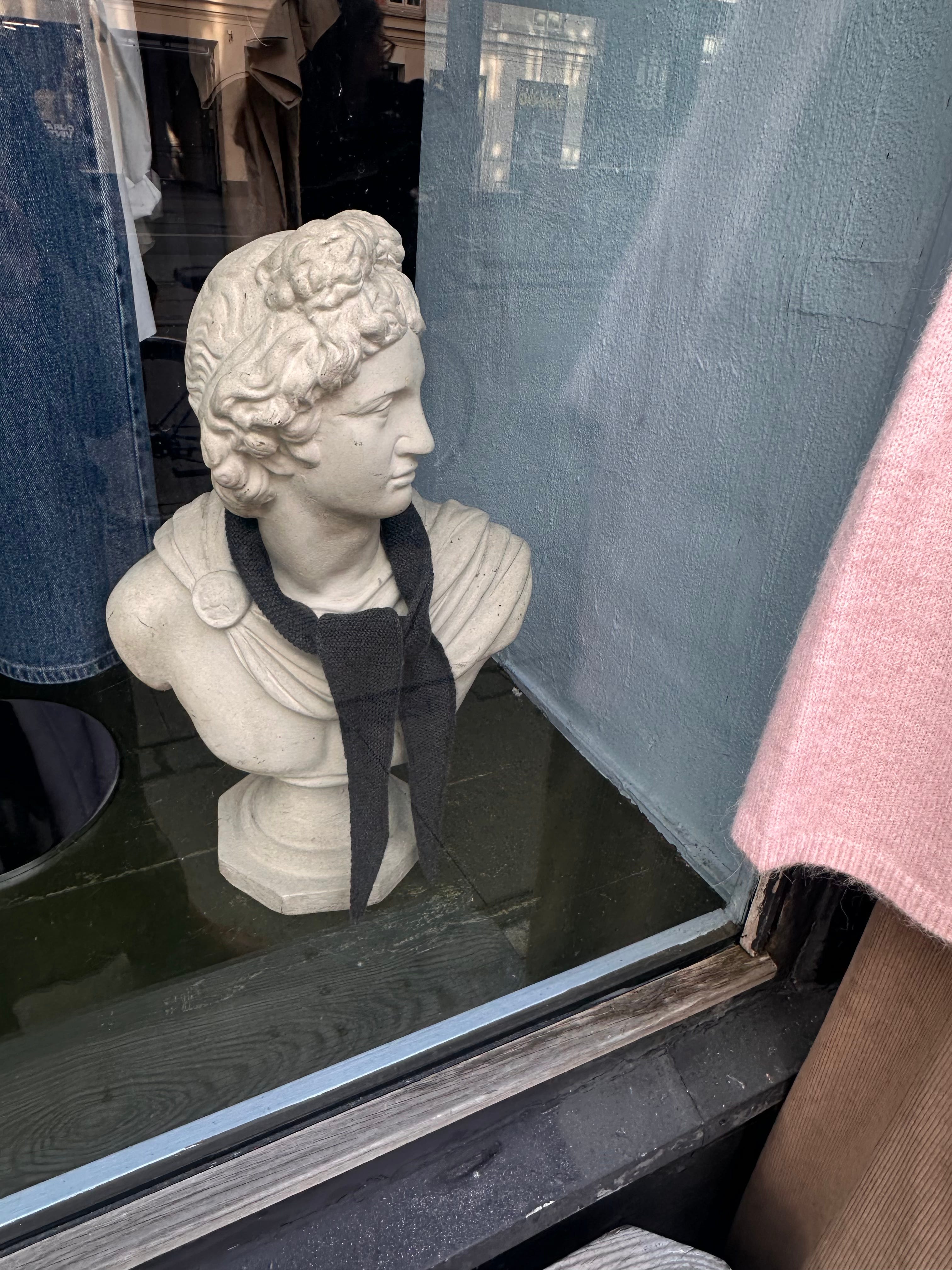
The neck as a focal point
The neck is becoming an increasingly important area for styling experimentation.
The signal extends beyond ties. Look for pieces such as:
structured crochet collars;
crochet scarves;
decorative neckpieces;
vintage brooches;
and handmade textile accessories.
These items can create visual focus while opening opportunities for local artisans and independent makers.
Ties beyond formalwear
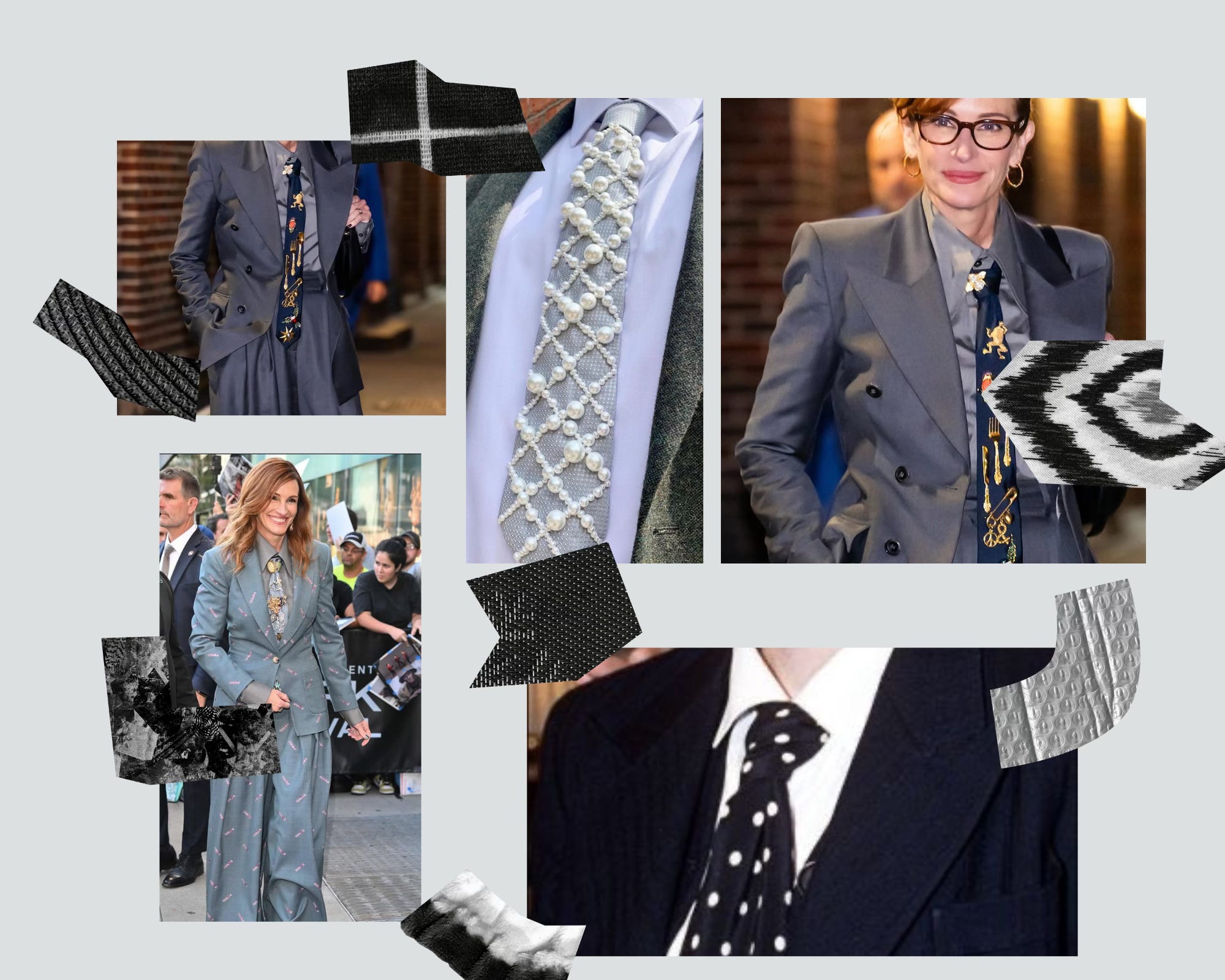
Ties are increasingly visible in street style, moving beyond traditional formalwear and entering womenswear as statement accessories.
Their relevance comes from reinterpretation.
They can be:
personalised with vintage brooches;
transformed through upcycling;
styled as oversized bows;
worn around the waist as belts;
or incorporated into shirts and dresses.
I have also observed tie-as-belt styling in retail window displays, suggesting that the signal is moving beyond individual experimentation and into commercial presentation.
With a wide variety of fabrics, colours and prints, secondhand ties offer strong potential for styling and storytelling.
How are fashion trends affecting secondhand tie prices?
This is where the signal becomes particularly interesting.
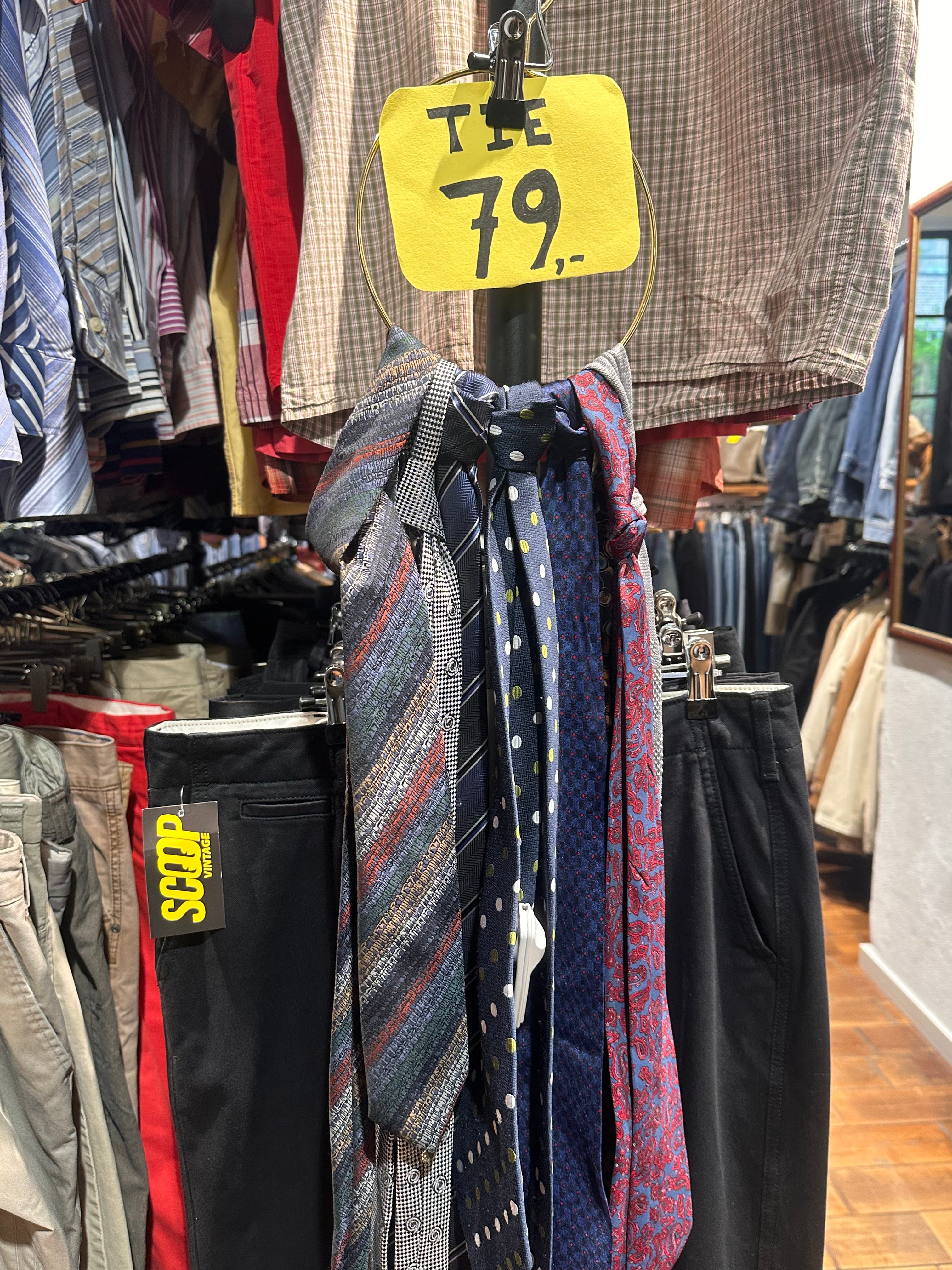
Through my observation of the circular-fashion market, I have seen a noticeable rise in secondhand tie prices.
Some stores are standardising prices at around 79 DKK, treating ties as statement accessories with a fixed value.
Other stores are pricing them between approximately 40 and 60 DKK, depending on the piece.
The important point is not the exact price alone.
It is the broader retail signal:
As fashion relevance increases, secondhand pricing can respond.
The tie is no longer being treated only as an overlooked formal accessory. Its renewed visibility appears to be influencing how some secondhand retailers perceive and price the category.
This is where a fashion trend becomes visible on the resale price tag.
Why are ties particularly relevant to circular fashion?
A tie can be as versatile as a scarf.
Scarves are currently being reworked around the waist and used to create new proportions in styling. Ties can follow a similar path through folds, knots, bows and unexpected placement.
This versatility matters for circular fashion because one existing accessory can generate multiple styling possibilities.
The same principle extends to crochet pieces, which can be layered unexpectedly over trousers and skirts to create new visual interest.
Westerncore and the secondhand opportunity
Westerncore continues to influence the fashion landscape, keeping wide belts and statement hardware relevant.
But I have noticed an interesting gap.
While demand for maximalist buckles appears strong within fashion styling, supply remains relatively limited in the local secondhand stores I observe.
Large rodeo-inspired buckles are still difficult to find.
For secondhand curators, this may represent an opportunity.
If consumer interest remains strong while local supply stays limited, these pieces may deserve closer attention when sourcing.
Fringe and suede are also worth watching within this broader direction.
What should circular-fashion curators learn from these signals?
Trend research should not simply encourage more acquisition.
For circular retail, it can help identify value in what already exists.
A forgotten tie can become a statement accessory.
A crochet fragment can become a styling element.
A vintage buckle can gain new relevance through Westerncore.
An overlooked category can move from low visibility to higher perceived value.
This is why I believe trend literacy matters within secondhand fashion.
A broader perspective on circular fashion
Creative and circular fashion should help extend product use through repetition, reinterpretation and new styling possibilities.
For me, fashion is more than constant acquisition.
It is also about understanding use, recognising value in what already exists and supporting creative communities.
This perspective connects directly with my Hybrid Fashion Manifesto, where I explore how new and secondhand, industrial and independent, handmade and mass-produced fashion can coexist more consciously.
My circular-fashion research ecosystem
My work across circular fashion currently develops through three connected editorial and research formats:
A personal six-month project examining consumption, shopping triggers, wardrobe inventory and the origins of my clothing.
How to Reduce Clothing Consumption: What I Learned From Six Months Without Buying Clothes

Can you stop buying clothes for six months while working with fashion trends?
Second Hand Therapy Tour
Field-based observations of secondhand spaces in Copenhagen, combining local curation, consumer behaviour and practical insights for circular-fashion businesses.
Second Hand Therapy: From Copenhagen Thrifting to Strategic Fashion Curation

I’ve launched a new playlist on my YouTube channel called Second Hand Therapy part of that list of things that feel like therapy, but aren’t. The goal is simple: to showcase local curation, creative potential, and how to experience sustainable fashion while staying fully aligned with global trends.
Second Hand News
Trend analysis focused on the circular market, identifying emerging fashion signals, resale opportunities and items that may already exist within secondhand environments.
Second Hand News: What to Look for Now in Vintage and Circular Fashion.

A practical trend guide for secondhand consumers, vintage sellers, circular-fashion businesses and independent creators.
Together, these formats allow me to examine circular fashion through three connected lenses:
Consumption. Behaviour. Trends.
Related topics: secondhand fashion, circular fashion, secondhand pricing, resale pricing, fashion trend signals, trend forecasting, trend literacy, circular retail, fashion curation, secondhand curation, consumer behaviour, perceived value, ties in womenswear, statement ties, neck styling, crochet accessories, upcycling, Westerncore, statement belts, vintage buckles, suede fashion, fringe details, resale market, retail signals, clothing circulation, Copenhagen secondhand culture.
About the author
I’m Andréia, a Copenhagen-based Trend, Culture & Consumer Behaviour Analyst specialising in fashion trends, circular fashion, secondhand culture and Scandinavian consumer shifts.
Through field research, street observation, retail insights and cultural analysis, I explore how changes in society influence what we wear, buy, value and communicate.
My work examines emerging cultural signals fashion, consumer behaviour, circularity and everyday life, translating observations into insights for brands, creative teams and cultural projects.
I’m open to research collaborations, commissioned field studies, trend and consumer insight projects, cultural research, creative collaborations and selected editorial opportunities.
If you’re a brand, agency, creative studio, researcher or organisation looking for an independent perspective from Copenhagen and Scandinavia, I’d be happy to explore how we might work together.
Thank you for reading and for being part of this growing community.
If this analysis made you think differently about your own wardrobe or shopping behaviour, share it with someone interested in fashion, consumer behaviour or conscious consumption.
You can also subscribe to follow my independent field observations and upcoming research from Copenhagen.
See you in the next edition.
Andréia Oliveira
Analista de Tendências, Cultura e Comportamento
Copenhagen-based | Fashion Trends, Circular Fashion & Cultural Signals